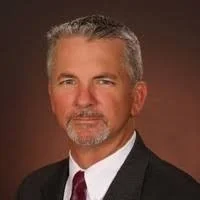
PI Mark Gillespie
After taking a hiatus from writing for PI Magazine, readers will see a return of my column called Investigating Innocence. I wrote stories about the unsung heroes, often seen in the background at press events led by attorneys when an innocent person walks out of prison. In many of those cases, it is the private investigator who found newly discovered evidence that a judge cited in reversing an unjust conviction.
The work of the private investigator is often the untold story.
Some of you holding this magazine and reading this column may have experienced this in the course of your careers.
A story I wrote years ago for PI Magazine, profiling the work of California PI Freddie Parish III typifies this. He was hired by Brian Banks, a star high school football player in Long Beach who had a scholarship to play for the powerhouse college program at USC, on track to play in the NFL, when those dreams were shattered by a false accusation that landed him in prison, convicted of raping a high school class mate.
Banks was serving time in the California Department of Corrections when he hired PI Freddie Parrish to interview the woman who put Banks in prison. The interview was video recorded and resulted in Banks’s conviction being overturned, unlocking the doors of prison for Brian Banks.
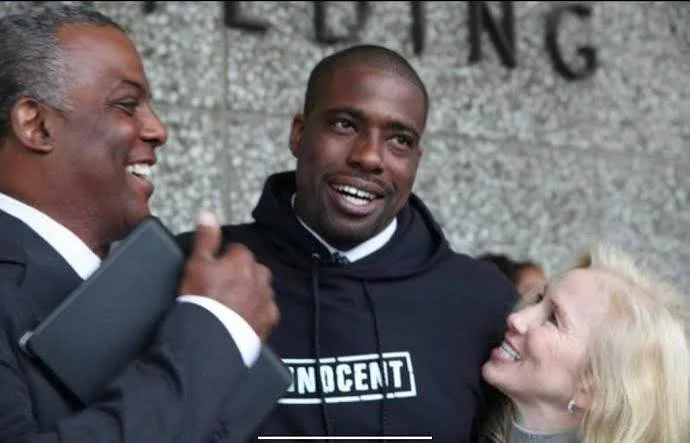
Fredie Parish III and his wife with Brian Banks celebrating his freedom that Parish helped secure.
But when Hollywood made the movie “Brian Banks,” starring Greg Kinnear as attorney Justin Brooks, with a cast that included Morgan Freeman, there was no actor who played the role of the PI, Freddie Parish, whose work should have been credited for the exoneration of Brian Banks.
So, if you have a story to tell, I want to hear from you.
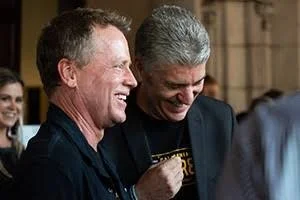
Actor Greg Kinnear with Justin Brooks founder of the California Innocence Project based in San Diego.
Now, let me turn your attention to another PI, Mark Gillespie, owner of Gillespie Forensics & Investigations based in Austin, Texas. Before becoming a private investigator, Mark served as the forensic director of the Austin Police Department. After becoming a PI, Gillespie went on to serve as president of the Texas Association of Legal Investigators (TALI).
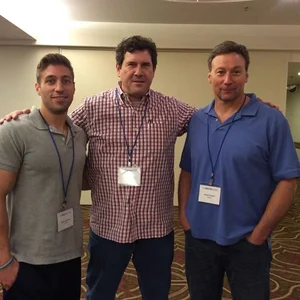
How we connected is a testament of networking. I was invited to speak at the Fraternal Order of Investigator’s conference, organized by PI’s Kelly Riddle and Steve Rambam, in Kerrville, Texas, held in March of 2026. I mentioned to one of the PIs who attended, Heidi Mummau, of my interest in recruiting a PI to form a state chapter of Investigating Innocence of Texas. Immediately, she mentioned the name “Mark Gillespie.” And from that referral, I was introduced to the person who would incorporate a state chapter of Investigating Innocence in Texas and who will serve as its director of investigations.
“I’ve spent my career following evidence where ever it leads,” said Gillespie. “Investigating Innocence gives me the opportunity to use that experience to take a fresh look at cases and ask a question our justice system should never be afraid to ask: Did we get it right?”
One of the speakers at the conference in Kerrville was Angela Tanzillo-Swarts, another forensic scientist who teaches at the University of North Texas in Denton. Her specialty is DNA, biology, and bloodstain pattern analysis. She saw the potential of collaborating with the non-profit national organization of private investigators that I started in 2013, the year I moved to Louisville, Kentucky.
Prior to that, I had started what is now the Illinois Innocence Project in Springfield, Illinois, 25 years ago. For 10 years I led that project part-time as its director of investigations, the first undergraduate program in the country. We had no law school or lawyers on staff. The 3 people we freed from prison during my tenure, as in the case of Brian Banks, was directly attributed to my efforts as a private investigator.
After starting Investigating Innocence, 3 more innocent people were freed from prison as a result of the time I donated pro bono. You can go to our website at Investigating Innocence to read more about how that was accomplished.
There was a point in time when I had reached the depths of a chasm of despair, lacking institutional support from a university, as I had when I started the Downstate Illinois Innocence Project. I pulled the plug and was ready to let go of the vision I had for Investigating Innocence.
But a new birth of life has resuscitated this dream of having the power of an organization of PIs supporting Investigating Innocence. And I thank Mark Gillespie and Angela Tanzillo-Swarts for breathing new life to save this idea from dying.
Investigating Innocence of Texas will sponsor a CLE program hosted by the University of North Texas (UNT) in Denton on March 2, 2027, an 8-Hour CLE, called “Bloodstain Pattern Analysis in the Courtroom: Lessons from wrongful conviction cases, contested forensic testimony, and evolving scientific standards.”
The aim of this program is to educate PIs, attorneys, judges, forensic practitioners, prosecutors and law enforcement on new standards BPA professionals are required to follow, after innocent people were exonerated.
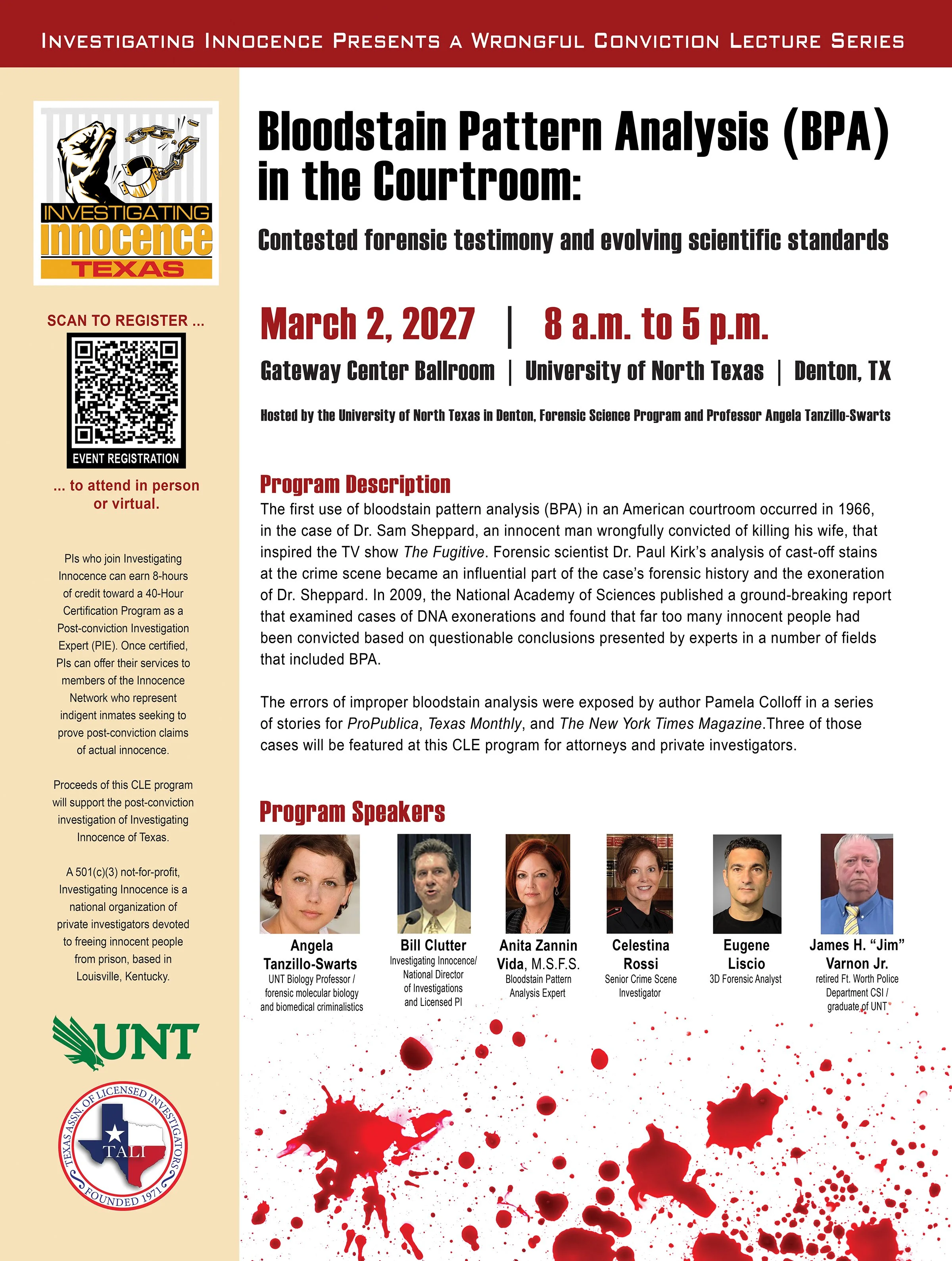
Investigating Innocence of Texas will be sponsoring a CLE program for attorneys, PIs, forensic scientists, law enforcement, judges and prosecutors to educate them on the flaws of convictions based on bloodstain analysis.
One of the speakers for the BPA program is Celestina Rossi, Senior Crime Scene Investigator for the Montgomery County District Attorney’s Office in Conroe, Texas. She will present on the case of Joe Bryan, a high school principal who was wrongfully convicted of his wife’s murder. Hired by the Texas Forensic Science Commission, her analysis of the case, led a BPA expert whose testimony at trial convinced a jury to convict Bryan, agreed to sign an affidavit stating that his conclusions about the bloodstain pattern analysis “was not accurate or scientifically supported.” Bryan was released after serving 33 years in prison.
PIs reading this story can help by becoming a member of Investigating Innocence. Dues raised and events we are planning will raise money to fund post-conviction investigations. As a benefit of membership, PIs can receive CLE training toward a 40-Hour Certification Program to become a Post-conviction Investigation Expert (PIE).
Members who join Investigating Innocence can view this program on-line, once the videos are posted to a platform called Beyond the CLE, recently created by a company based in Orlando, Florida, or can attend the event in-person.
There will be more developments on this story in the next edition of PI Magazine.
Bill Clutter was among the speakers in Nov. 1998, who presented at the historic National Conference on Wrongful Convictions and the Death Penalty at Northwestern Law School in Chicago. That event became the catalyst for the creation of the Innocence Network, nearly 80 projects, including the Illinois Innocence Project, which Bill started more than a quarter century ago. He can be contacted at billcutter@ymail.com

This article was published in PI Magazine in the Nov/Dec 2026 edition. To subscribe, click on the logo.
The Forensic Science Program at the University of North Texas in Denton, led by Professor Angela Tanzillo-Swarts, will host this conference, co-sponsored by the Joyce Brown Innocence Project at UNT’s Dallas College of Law that will provide attorneys with professional ethics CLE credits for lawyers who attend the conference.

Another sponsor of the conference is the Texas Association of Legal Investigators (TALI), an organization that PI Mark Gillespie led as its president. Under Mark’s leadership as TALI’s president, he conceived the idea of creating a larger association known as the Big 3, a collaboration between the California Association of Legal Investigators (CALI) and the Florida Association of Legal Investigators (FALI). PIs can enjoy the networking benefits by joining the Big if you are a PI licensed in those three states, or as an associate member if licensed in another state. Click on the logo above to join the Big 3!