

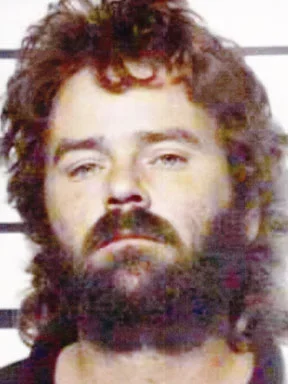
Booking photo of Tommy Lynn Sells arrested on New Year’s Day 2000 in Del Rio, Texas. Photo credit Texas Rangers
For Immediate Release
Denton, Texas.
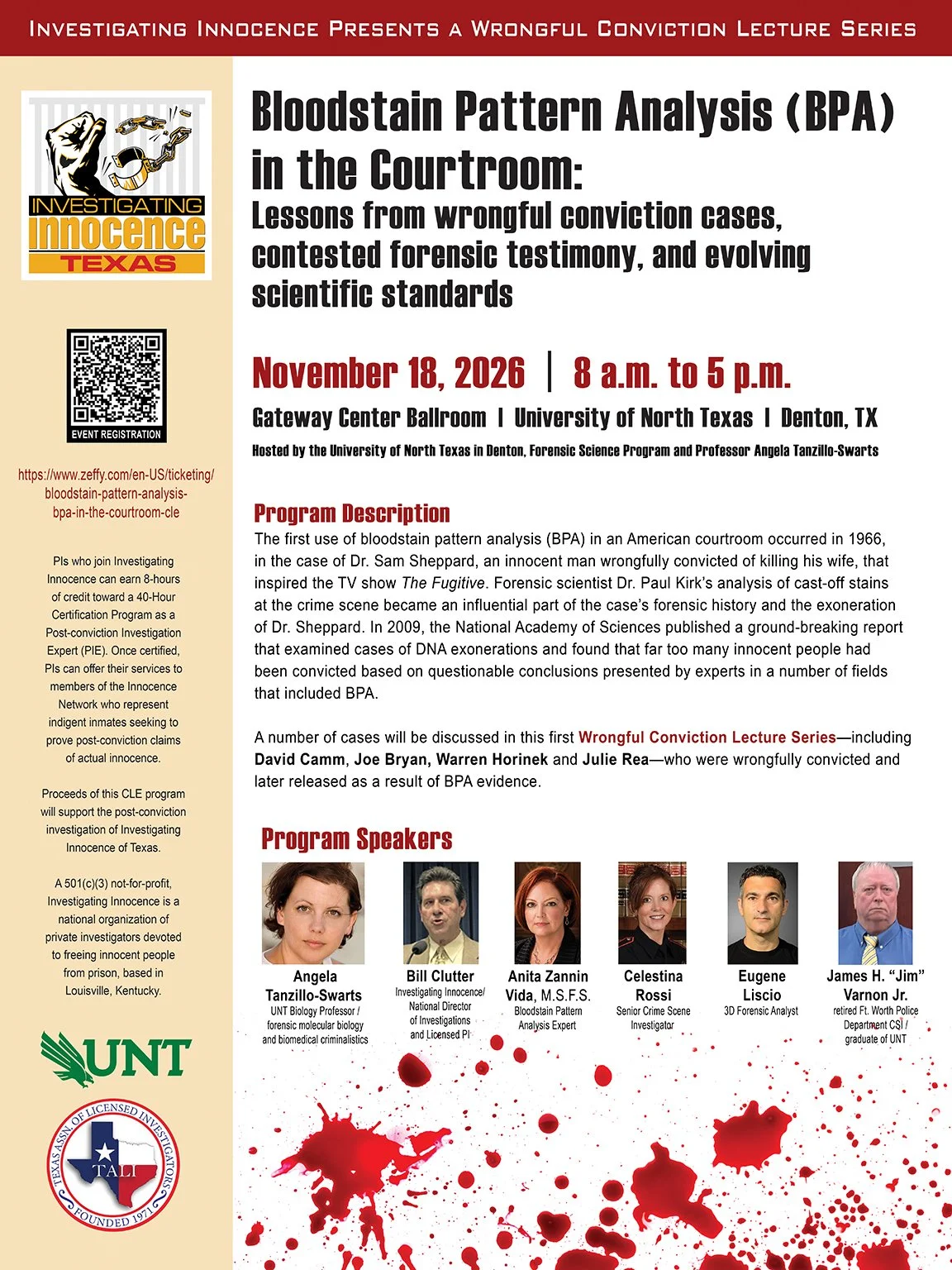
The errors of improper bloodstain analysis were exposed by author Pamela Colloff in a series of stories for ProPublica, Texas Monthly, and The New York Times Magazine. Three of those cases will be featured at a program to be held at the University of North Texas on Nov. 18 in Denton, beginning at 8 a.m., titled “Bloodstain Pattern Analysis in the Courtroom: Lessons from Wrongful Conviction Cases.”
One of the cases that will be featured is Julie Rea, a mother who was wrongfully convicted of killing her 10-year-old son in Lawrenceville, Illinois on Oct. 13, 1997.
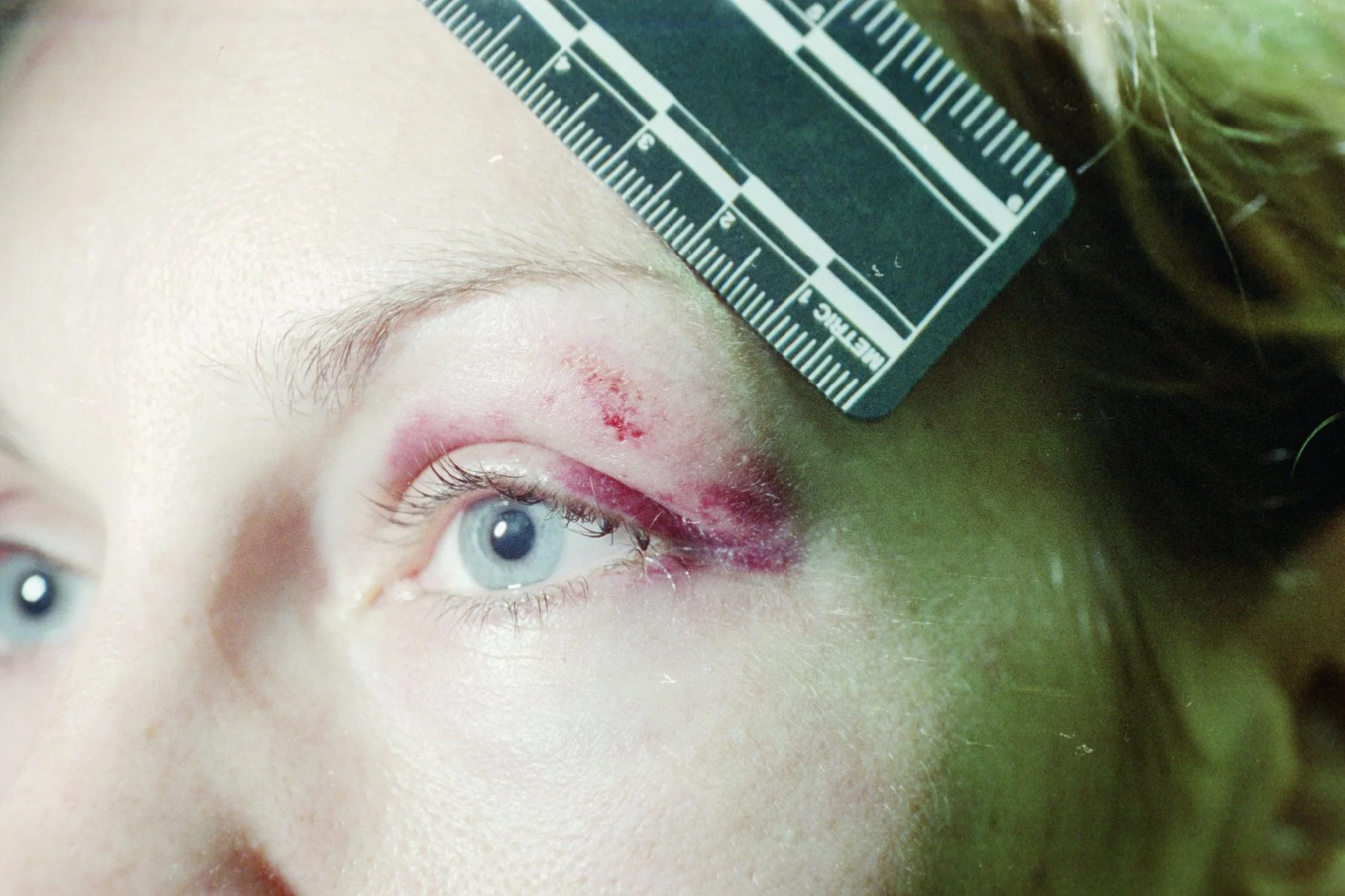
Crime scene photo documenting injuries Julie Rea suffered from an attack during a home invasion. She was awakened at 4 A.M. by the blood curdling scream of her 10-year-old son, Joel. The assailant used a knife from the kitchen during a home invasion to kill Joel but dropped the knife after colliding into the child’s mother, who ran into Joel’s bedroom.
“The real killer, Tommy Lynn Sells, was one of the most prolific and terrifying serial killers to ever roam the United States,” said Bill Clutter, who leads a national organization of private investigators, named Investigating Innocence.
Clutter’s post-conviction investigation in the Rea case convinced Texas Ranger John Allen that the actual killer was Sells.
Sells claimed to have killed as many as 70 people over a 20-year criminal career. Texas Rangers linked Sells to 22 homicides, including nine-year-old Mary Beatrice Perez, who was abducted April 18, 1999, during San Antonio’s annual Fiesta street festival and also to the Del Rio murder of 13-year-old Kaylene Harris, a crime that led to Sell’s arrest on New Year’s Day 2000.
Clutter interviewed Sells prior to his execution in 2014 and linked him to the 1985 murders of a newlywed couple in Paris, Illinois that had previously led to the wrongful convictions of two men. One of the men, Randy Steidl, who was given a death sentence, later testified before state lawmakers during the vote to abolish the death penalty in Illinois in 2011.
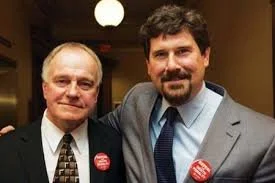
Randy Steidl (L) and PI Bill Clutter following the vote to abolish the death penalty in Illinois.
A third case Clutter linked to Sells was the 1982 murder of a woman in St. Louis. A surviving witness, the woman’s daughter, age 7, at the time, had been manipulated by police detectives to identify a former boyfriend, Rodney Lincoln. Thirty-four years later, as an adult, the daughter finally identified Tommy Lynn Sells as her mother’s actual killer.

Rodney Lincoln was sent to prison based on the eyewitness testimony of Melissa DeBoer (Right). The show convinced her that it was Sells who killed her mother. Then Missouri Governor Eric Greitens freed Lincoln in June of 2018, following the airing of Crime Watch Daily’s Emmy Award nominated story of Investigating Innocence’s investigation linking Sells to the murder of Melissa’s mother in 1982.
“I’m convinced there are more innocent people who are serving time in prison for the crimes of serial killer Tommy Lynn Sells,” said Clutter.
A state chapter of Investigating Innocence has been formed by Austin-based private investigator Mark Gillespie, who managed the Austin PD Forensic Science Division before becoming a PI. The not-for-profit organization in Texas hopes to raise money to provide post-conviction investigative services to projects like the Joyce Brown Innocence Project at UNT’s Dallas College of Law, and other projects within the state. “A wrongful conviction does not correct itself. It takes investigators willing to find witnesses, examine overlooked evidence, and question conclusions that may have gone unchallenged for years. We formed Investigating Innocence of Texas to help bring those resources to cases that need another look,” Gillespie said.
Professor Angela Tanzillo-Swarts, MBE, a member of the faculty at UNT’s Forensic Science Program and career Forensic Scientist of 20+ years will present at the conference and will lead Investigating Innocence’s Forensic Science Advisory Panel. Tanzillo-Swarts stated, “False or misleading forensic evidence was recorded as a contributing factor in 29% of exonerations in the United States.” The Forensic Science Advisory Panel will assist in the investigation of actual innocence claims to identify false or misleading forensic evidence. “When findings are overstated, their presentation can mislead rather than illuminate—with profound consequences for justice,” said Tanzillo-Swarts.
The program at the University of North Texas will feature the wrongful conviction cases of Julie Rea, David Camm, and Joe Bryan, who were wrongfully convicted based on misinterpreted bloodstain patterns by forensic experts.
For More Information contact Bill Clutter (217)899-4353
Mark Gillespie (512)680-5851
Angela Tanzillo-Swarts (940)565-4088.
Attorneys and PIs can earn continuing education credits by attending this one-day seminar. Seating for the Nov. 18 event is limited. The event is open to the public by making a tax-deductible donation to support our post-conviction investigations. Those wishing to attend or view the recorded program can email InvestigatingInnocence@gmail.com
Or scan the QR code below:

Links to the stories of Pamela Colloff:
The case of Julie Rea
She Was Exonerated of the Murder of Her Son. Her Life Is Still Shattered. - The New York Times
The case of Joe Bryan
ProPublica began a series of stories on the errors of bloodstain pattern analysis. The link below gives the history of BPA in American courtrooms.
How an Unproven Forensic Science Became a Courtroom Staple - The New York Times
Blood Will Tell, Part 1: Who Killed Mickey Bryan? - The New York Times
Blood Will Tell, Part 2: Did Faulty Evidence Doom Joe Bryan? - The New York Times
Blood-Spatter Expert in Joe Bryan Case Says “My Conclusions Were Wrong” — ProPublica
